universal Origin
David
/Da′vid/
“beloved”

/Da′vid/
“beloved”
Highest density
Over 11.4 million individuals across 202 countries carry the name David. In the United Kingdom and Australia, it maintains a #2 ranking, demonstrating a saturation level rarely seen in biblical nomenclature. It appears in 954 separate verses within the biblical text, establishing it as one of the most documented identifiers in the canon.
The name originates from the Hebrew root D-V-D, appearing as דָּוִד (Dāwīḏ). Linguists identify its meaning as beloved, though its phonetic structure is notably distinct from other Hebrew theophoric names that include suffixes referencing God. The Greek transition to Δαυίδ (Dauíd) retained the dental consonants, preserving the hard, percussive sound across Mediterranean trade routes and into Latin systems.
David’s narrative focuses on the brutal mechanics of power and succession. He transitioned from a rural shepherd to a fugitive and eventually the monarch of the United Kingdom of Israel and Judah. The text records high-stakes failures, including adultery and the state-sanctioned assassination of Uriah. He faced the physical risk of execution by King Saul and later the political fragmentation of his kingdom following a coup attempt by his own son.
North America hosts the highest concentration with several million bearers, including a #7 rank in the United States. In contrast, the British Virgin Islands contains only 56 bearers, yet the name still reaches a #2 ranking within that demographic. This density indicates that the name does not merely exist in large populations but dominates smaller, isolated linguistic pools from Barbados to Vanuatu.
“David remains a statistical staple in Western Europe, ranking #2 in the United Kingdom and #4 in Ireland. It has avoided the cyclical volatility of fashion-driven names. While it has moved to #7 in the United States, it maintains a high baseline frequency across diverse socioeconomic brackets. It functions as a linguistic anchor across 202 countries, showing no signs of total displacement by modern naming trends.”
The second king of the United Kingdom of Israel and Judah, a poet-warrior, and a central ancestor in the messianic line.
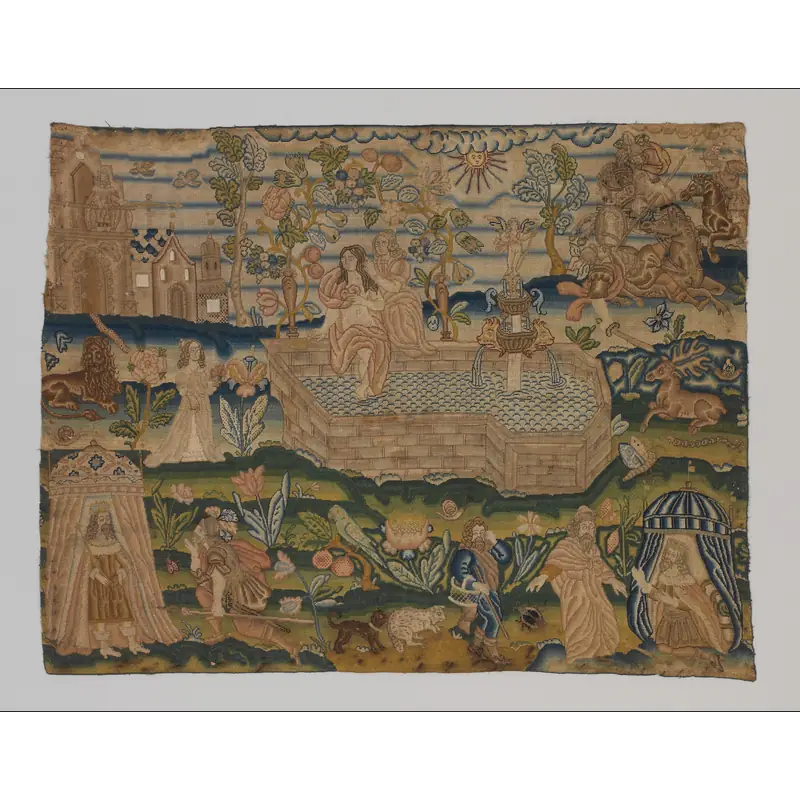
David was the youngest son of Jesse of Bethlehem, initially a shepherd who gained fame for his musical skill and his defeat of the Philistine giant Goliath. Anointed by the prophet Samuel to replace King Saul, David spent years as a fugitive before ascending to the throne, first over Judah in Hebron and later over all Israel. He conquered Jerusalem, establishing it as the political and religious capital by bringing the Ark of the Covenant to the city. His reign is characterized by military expansion, the establishment of a dynasty promised to endure forever (the Davidic Covenant), and personal complexities, including his adulterous affair with Bathsheba and the subsequent rebellion of his son Absalom. Traditionally attributed as the author of many Psalms, David is revered as a model of repentance and the ideal king in Judaism, a prophet in Islam, and the forefather of Jesus Christ in Christianity.
Hover to read full bio
Click on any name to explore their story. Line thickness shows connection strength.