universal Origin
Martha
/Mar′tha/
“lady”

/Mar′tha/
“lady”
Highest density
Over one million women in Mexico bear the name Martha, making it the 14th most common name in the country. This concentration accounts for nearly a quarter of the 4.6 million global bearers. While the name maintains a massive presence in Latin America, its highest density appears in Namibia, where it ranks as the 4th most frequent female name. This distribution highlights a name that operates as a high-volume staple in specific post-colonial geographies rather than a uniform global constant.
Martha derives from the Aramaic marəta, the feminine singular of mar, meaning lord or master. In its original linguistic context, the name translates precisely to lady or mistress of the house. It entered the Western lexicon via the Greek Mártha. Unlike names derived from abstract virtues or natural elements, Martha functions as a title of social status and domestic authority. The phonetic structure relies on hard consonants, maintaining a linguistic rigidity that has survived translation into 181 countries.
The biblical record centers on Martha of Bethany, a woman managing the logistics of a household during a period of intense social friction. In the Lucan account, she navigates the tension between hospitality and discipleship, challenging the expectation that she labor alone. Her most significant narrative contribution occurs in the Gospel of John following the death of her brother, Lazarus. She initiates a theological confrontation with Jesus, demanding accountability for his absence and articulating a confession of faith that predates the formal establishment of the church. Her role is defined by administrative responsibility and verbal assertiveness.
Martha currently appears in 181 countries, though its distribution is highly skewed. South America holds nearly one million bearers, with Argentina ranking it 19th. In contrast, Western Europe shows a lower density; while it remains in the top 50 in Portugal and Spain, it drops to 182nd in Italy. The data reveals an interesting outlier in Estonia, where 636 males are recorded under the name. This is a phonetic coincidence; the Estonian masculine name Mart or its variants likely account for this cluster rather than a local shift in the gender of the biblical figure.
“Martha remains a high-frequency choice in Latin American demographics but has seen a steady decline in Anglophone regions. In the United States and Canada, it has transitioned from a primary choice to a secondary or legacy name, often appearing in middle-name slots rather than as a first-choice identifier for newborns. Its current trajectory suggests a consolidation in the Global South. While it has lost its mid-century ubiquity in the North, its massive numbers in Mexico and Colombia ensure its continued demographic relevance for the foreseeable future.”
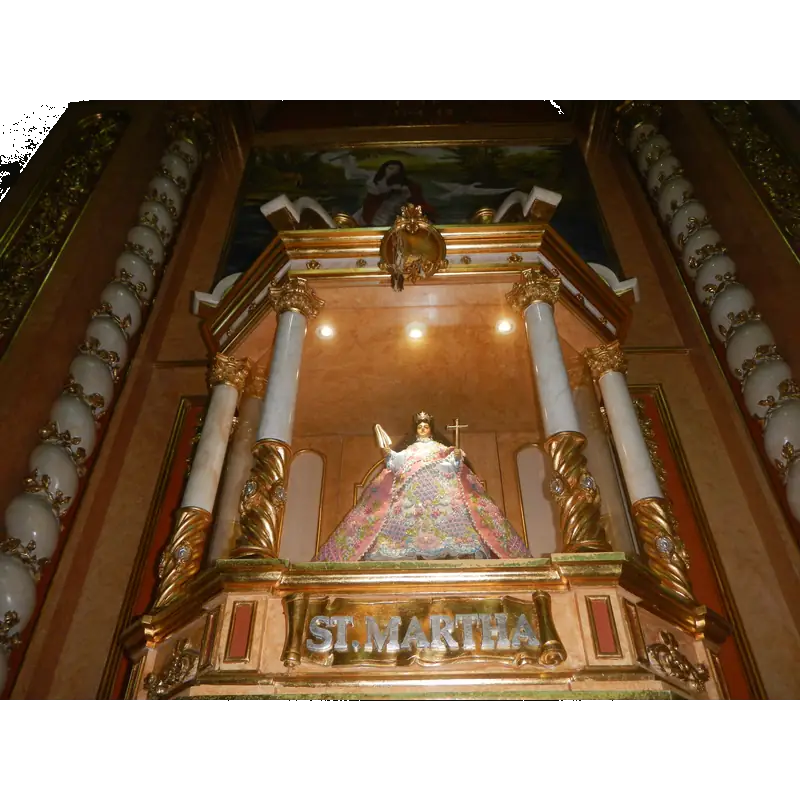
Martha of Bethany is a biblical figure, sister of Mary and Lazarus, known for her hospitality to Jesus and her profound declaration of faith in him.
Martha is a prominent figure in the New Testament, residing in Bethany with her sister Mary and brother Lazarus, all of whom were beloved by Jesus. She is first mentioned in the Gospel of Luke, where she welcomes Jesus into her home and is gently reminded to prioritize listening to his teachings over being distracted by many preparations. Her character is further developed in the Gospel of John during the illness and death of her brother. It is Martha who goes out to meet Jesus upon his arrival, expressing both her sorrow and her deep faith by declaring, "I believe that you are the Christ, the Son of God, who was to come into the world". This confession of faith is a pivotal moment in the narrative, preceding Jesus' miracle of raising Lazarus from the dead. In a subsequent account, Martha is again seen serving a meal in Jesus' honor, embodying her characteristic gift of active service and hospitality.
Hover to read full bio
Click on any name to explore their story. Line thickness shows connection strength.